The Human Horologium
Performance and video installation, 2025, 4K video, 26:56 min.
The Human Horologium is the third part of Aurelia Mihai's cinematic performative series Living Monuments. In these pieces, Mihai explores the invisible connections between people and places, examining the role of monuments in an ever-changing society and considers how these monuments might be reimagined for the present day.
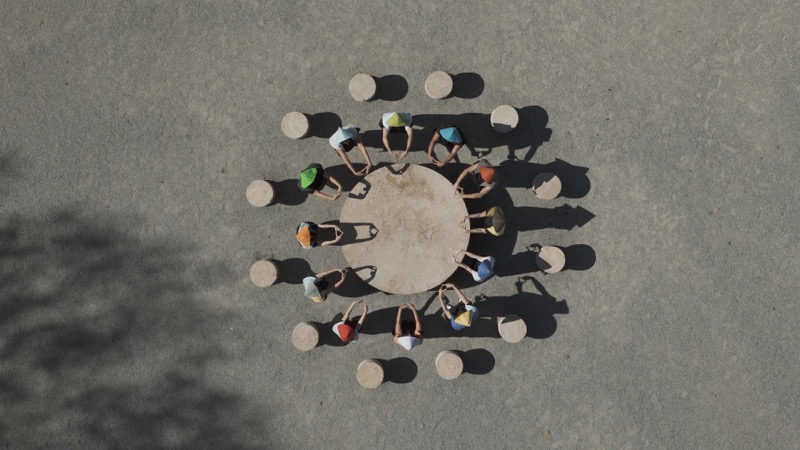
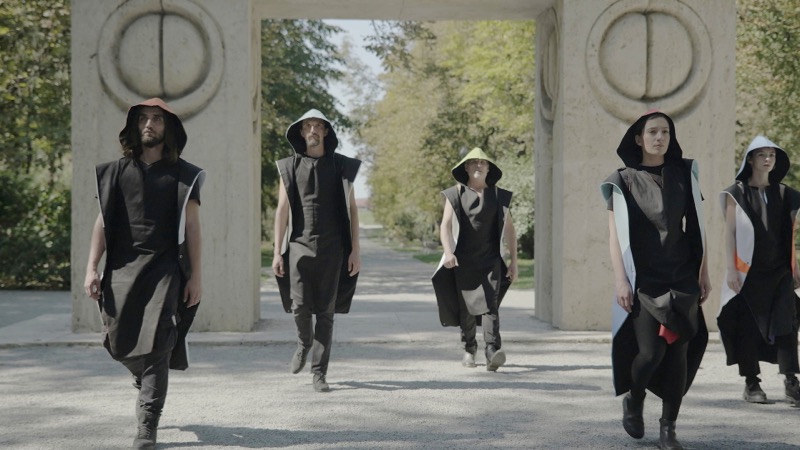
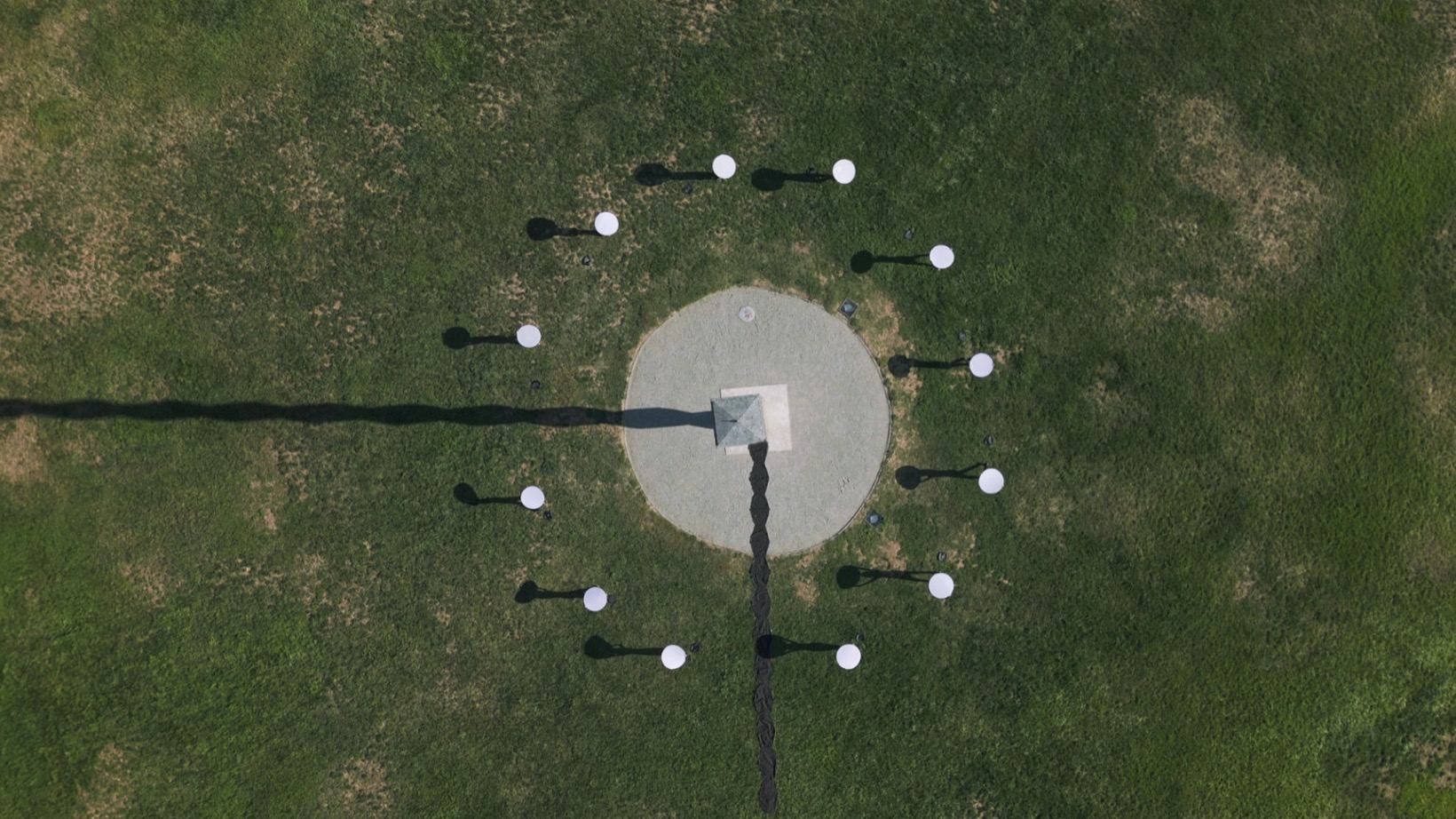
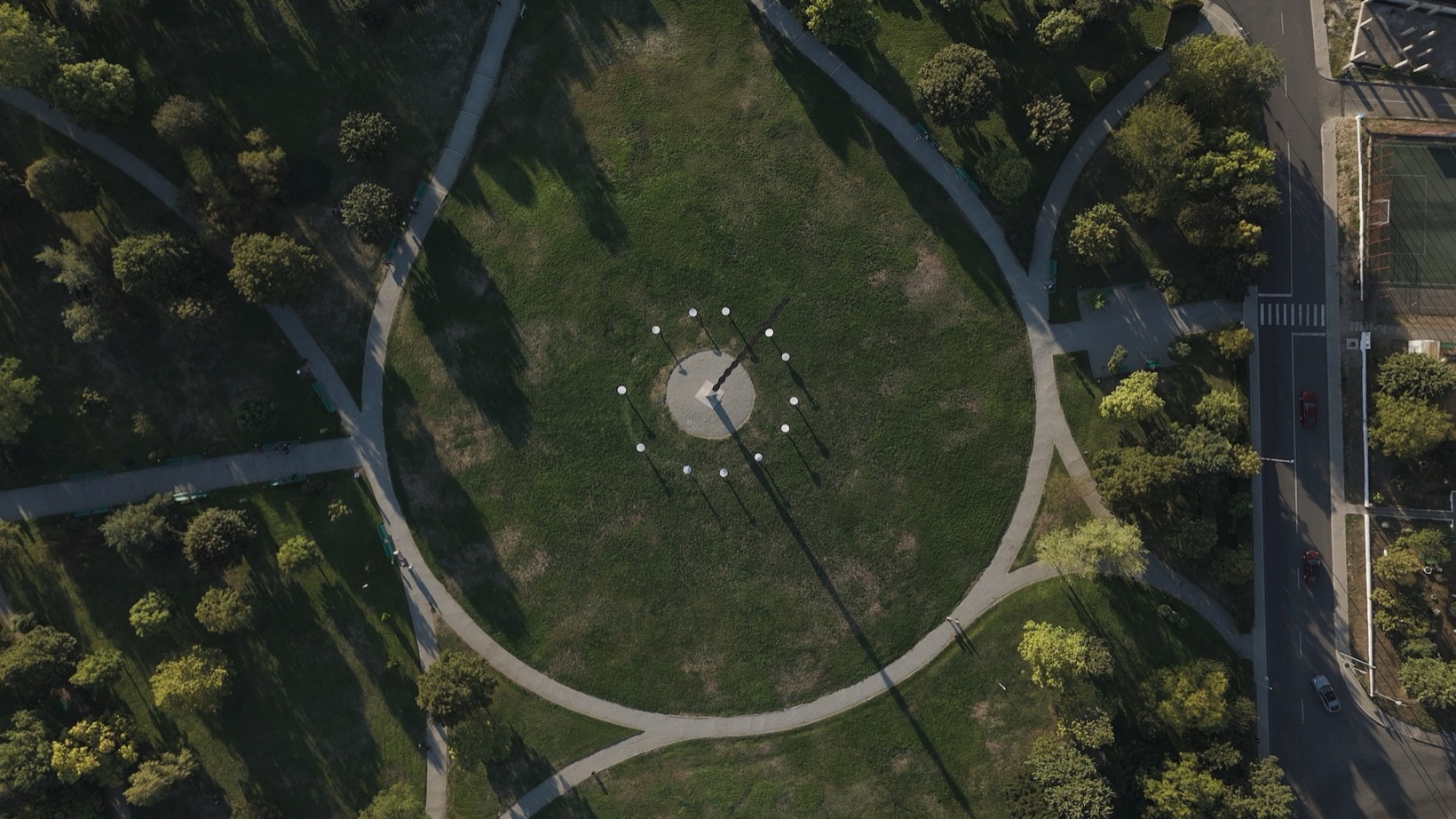
The Human Horologium was created in Târgu Jiu, Romania, along the avenue of the famous Brâncusi ensemble: Table of Silence, Gate of the Kiss, and Endless Column. Twelve performers stage a living clock, visualizing time as ephemeral, collective “material.” Through light, shadow, and movement, a dialogue emerges between monuments and people, addressing both the transience of life and universal themes such as cohesion and community.
With her work, the artist invites us to reflect on the meaning of time, nature, and collective representations. She combines historical and contemporary perspectives and encourages us to understand monuments not only as static objects, but as living, temporary symbols for social and ecological issues.
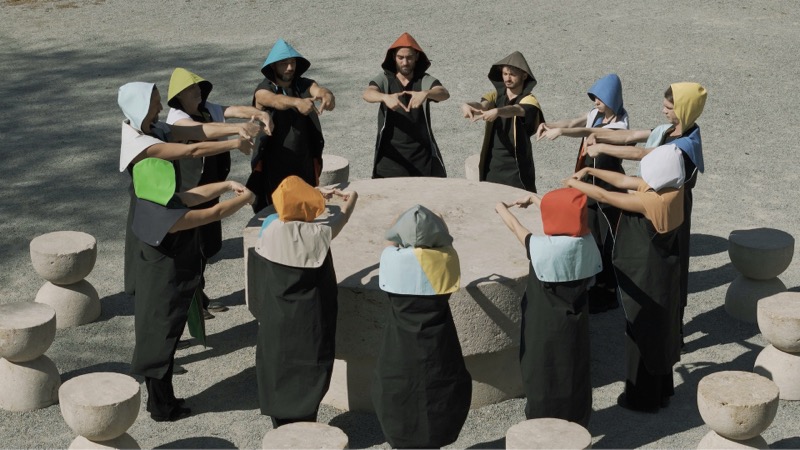
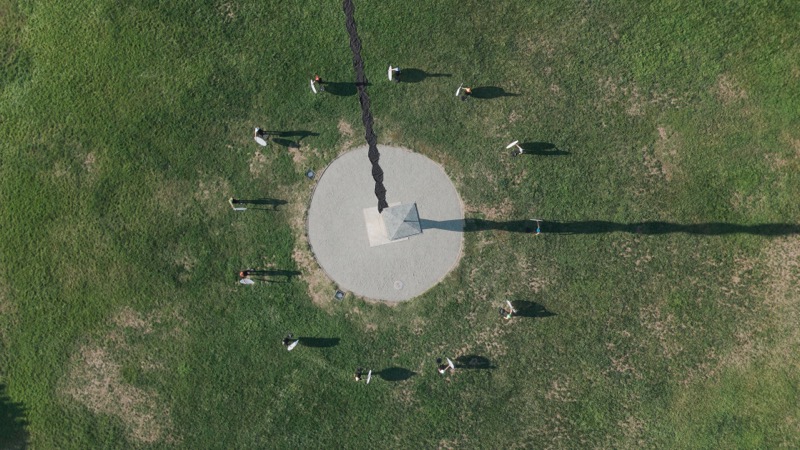
The site of the performance is a 1.3 km long avenue with the three-part ensemble by Romanian modernist artist Constantin Brâncuși, donated in 1937 by the Gorj Women's League for a monument commemorating the Romanian soldiers who died on the banks of the Jiu River during the First World War. In 1938, the artist, who was already living in Paris, completed the three-part ensemble consisting of the "Table of Silence", the "Gate of Kisses" and the "Endless Column". The Human Horologium starts at the Jiu River and follows a route along which 12 performers gather from different directions. Dressed in modular costumes they follow the route, accompanied by the camera. The encounter between monument and body creates a dialogue in terms of time and space. It begins with the "Table of Silence", which with its 12 chairs resembles a clock. The 24 hands of the protagonists, filmed from a bird's eye view, become a collective organism in a rhythmic beat - the motif of time passing. The procession continues through the "Gate of the Kiss" to the "Endless Colomn". The flying camera follows the performers to the centre of the square, where they form a circle around the column - the face of the clock. The performers take off their sleeveless coats in pairs, in six groups, and lay all twelve coats on the ground next to the column with the black inside facing up. In this way, the twelve coats become a series of black rhombuses, which together form the shadow of the columns. With rhythmic movements, they unfold white reflectors and hold them above their heads, reflecting the sunlight and casting their own shadows on the ground. The picture expands to show the human clock, framed by the circular path on which passersby come and go. The image rotates and the shadows move until the circle of time is complete. After the nature and ecological elements wind and water — already staged in the first two parts of the Living Monuments, the sun and land will move to the foreground as the “leading actors” in Tirgu Jiu. They will act in conjunction with oversized long shadows which, together with the 12 characters, will form the ensemble for the “Human Horologium”.A monument to time, at the interface between the timelessness of the cosmos and the temporality of human existence. A kind of invitation to think of time and nature outside ourselves, in a global and universal perspective.